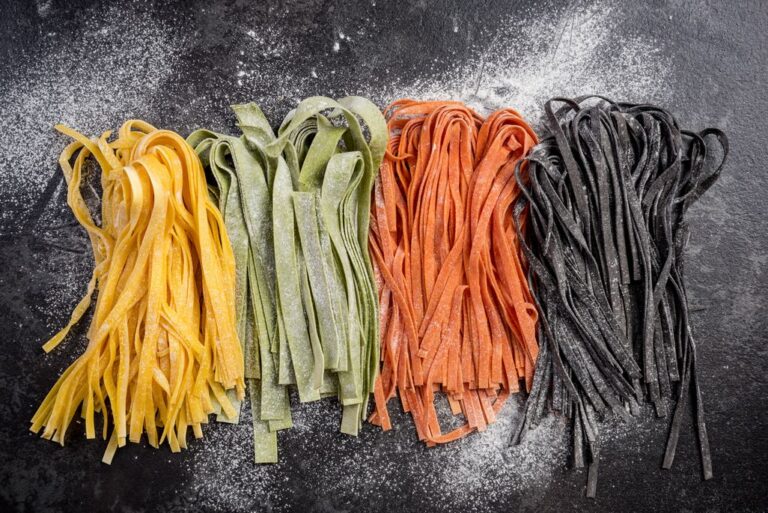
Brodo Vegetale (Italian Vegetable broth)
This post may contain affiliate links. Please read our disclosure policy.
Jump to RecipeBrodo vegetale (Italian vegetable broth) is one of those quiet, essential recipes that form the backbone of so many dishes in Italian cooking. It’s incredibly simple to make, yet it brings a fresh, delicate flavor that no store‑bought broth or bouillon cube can match.
In Italy, this broth is part of everyday life. With our busy schedules, it’s tempting to reach for pre‑made broth or powdered mixes, but preparing brodo vegetale at home takes minimal effort. I often make a big pot during the week, in between tasks, and keep it in the fridge or freezer so it’s ready for quick meals like risotto, soups, legumes, or even a comforting bowl of tortellini in brodo on a cold evening.
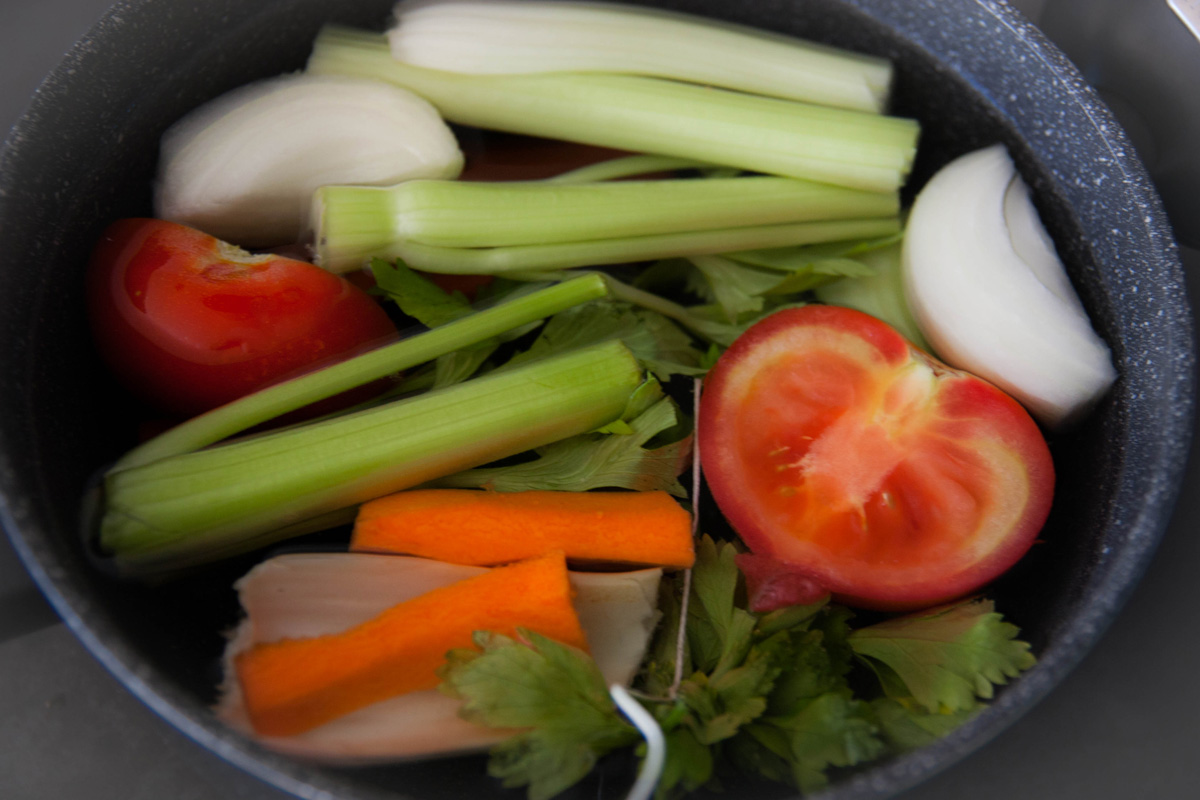
One of the beautiful things about brodo vegetale is its flexibility. You can swap vegetables based on what’s in season or what you have on hand, and the result is always delicious. And if you want to avoid waste, you can blend the cooked vegetables into a smooth puree and use it to enrich soups or pasta dishes.
Let’s make this simple, nourishing Italian broth together.
Ingredients
This recipe yields about 2 liters (8 cups) of brodo vegetale and is my go-to blend for everyday cooking. I always make it in bulk so I can freeze portions and have them ready for risotto, tortellini in brodo, pastina con brodo, legumes, and many classic primi piatti. It’s a simple, nourishing base that brings fresh flavor to so many Italian dishes.
- Water
- Celery
- Yellow onion
- Leek
- Carrots
- Small potatoes
- Ripe tomato
- A bunch of parsley
- Black peppercorns
- Salt
How Italians Use Brodo Vegetale
In Italian cooking, brodo vegetale is a quiet workhorse that shows up in countless everyday dishes. Families use it as the base for risotti, to cook legumes until tender, to moisten vegetable stews, and to bring gentle flavor to simple soups like pastina in brodo. It’s also the broth poured over tortellini on cold evenings, the liquid that transforms leftover vegetables into a comforting minestra, and the foundation for many light, nourishing meals.
How to make brodo vegetale
Prepare the vegetables. Rinse all the vegetables under cold running water, except the onion. Cut the tomato in half, slice the leek into chunks, and cut the celery lengthwise and then into large pieces.
Cut the onion in two and remove the first two layers of skins. Place the onion in a large pot with the cut side facing down. Turn on the heat and toast the onion for about 1½ minutes, being careful not to let it burn. Then flip it over and toast the other side for another minute.
Place all the vegetables in the pot. Keep the parsley tied together so it’s easy to remove later. Add the whole peppercorns.
Pour in the water and turn the heat to medium‑high. Bring to a simmer. Once the broth begins to boil, lower the heat and let it gently simmer for about 1 hour. Do not add salt yet.
Taste and season. After an hour, taste the broth. Adjust the salt to your liking.
Strain the broth. Using a fine‑mesh strainer, filter the broth to separate it from the vegetables. You’ll have a clear, aromatic liquid perfect for risotto, soups, or pasta dishes.
TIP. How to avoid waste. Blend the cooked vegetables and add them back to the broth for a thicker, heartier base.
Variations
A good brodo vegetale is wonderfully flexible, and its flavor shifts gently with the seasons. You can build a broth that’s light and delicate or one that’s deeper and more aromatic simply by choosing different vegetables. Here’s a quick guide to what you can add, what to avoid, and how herbs and spices can shape the final flavor.
Vegetables You can add (and the flavor they bring)
| Vegetable | Flavor Contribution | Notes |
|---|---|---|
| Onion | Sweet, savory backbone | Yellow onions give the cleanest flavor; toasting adds complexity. |
| Yellow Potatoes | Body and subtle sweetness | Avoid starchy varieties to keep the broth clear. |
| Zucchini | Light, fresh, summery notes | Best in warm months; keep quantities modest. |
| Spinach | Earthy, mineral flavor | Use sparingly to avoid a green-tinted broth. |
| Tuscan kale or escarole | Slight bitterness and depth | Adds complexity when used in small amounts. |
| Mushrooms | Umami and richness | Ideal for a more savory winter broth. |
| Bell peppers (small amount) | Bright, zesty edge | Adds in small amount. Can dominate if overused. |
Vegetables to avoid (and why)
| Vegetable | Why to Avoid |
|---|---|
| Cauliflower, broccoli, cabbage | Strong cruciferous flavors overpower the broth and create sulfur notes. |
| Radicchio | Turns the broth bitter and adds unwanted color. |
| Eggplant | Can make the broth taste muddy or bitter. |
| Fennel | Adds a sweet, anise flavor that can take over the pot. |
|
Artichokes or asparagus |
Too expensive to use as base vegetables; can dominate the flavor. (Use trimmings only when making risotto featuring these vegetables.) |
Herbs & Spices You Can Add (and their effect)
Another great way to vary your brodo is by adding herbs or spices.
| Herb/Spice | Flavor Result | How to Use |
|---|---|---|
| Bay leaf | Subtle herbal depth | One leaf is enough for a large pot. |
| Thyme | Earthy, savory notes | Use sparingly; can overpower delicate vegetables. |
| Rosemary | Piney, aromatic intensity | Only a tiny sprig; strong flavor. |
| Black peppercorns | Gentle heat and roundness | Whole peppercorns keep the broth clear. |
| Garlic (whole clove) | Soft sweetness, mild aroma | Adds warmth without sharpness. |
| Lemon peel | Bright, clean citrus lift | Great for a lighter, summery broth. |
| Ginger slice | Fresh, warming spice | Lovely in winter; use lightly. |
Storage & Tips
- Refrigerator: store in an airtight jar for up to 3 days.
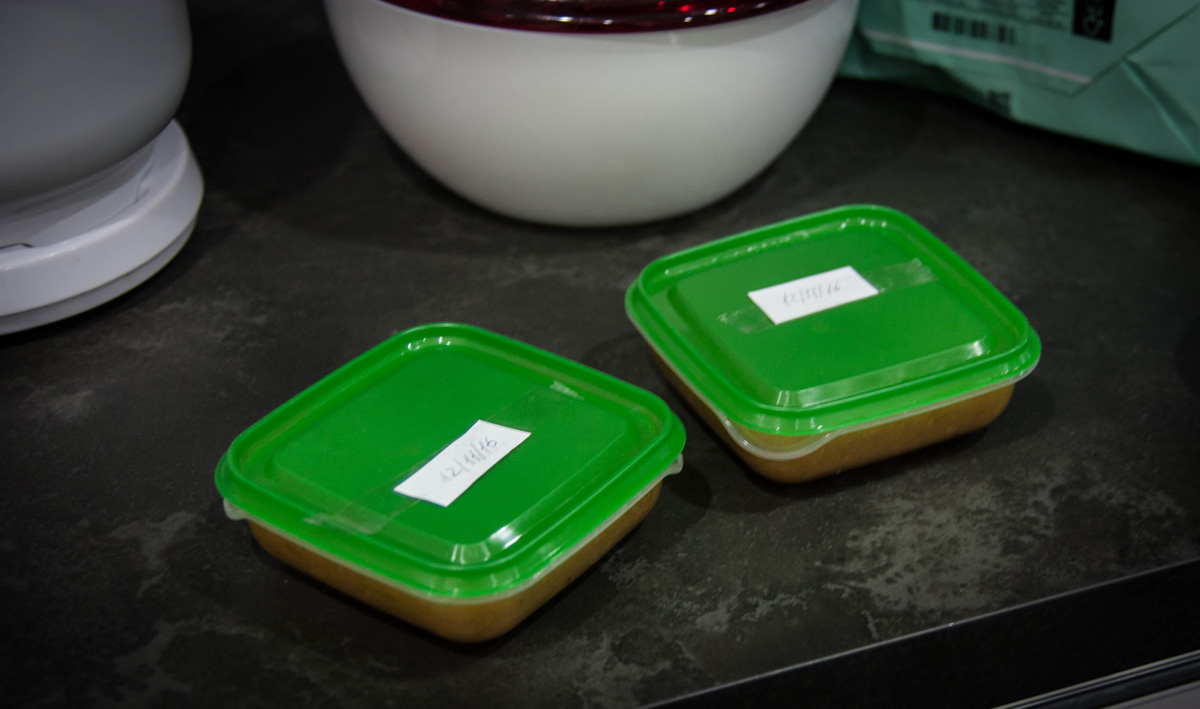
- Freezer: freeze in ice cube trays or small containers for up to 3 months. Transfer frozen cubes to freezer bags for easy use.
- Avoid waste: blend leftover vegetables into a puree and use it to enrich soups or pasta dishes.
- Label your broth: always date your containers before freezing.
F.A.Q. Italian Vegetable broth
Brodo vegetale is a traditional Italian vegetable broth made by simmering fresh vegetables to create a light, flavorful stock used in many primi piatti (main courses).
It’s a base for risotto, soups, legumes, and simple piatti unici like tortellini in brodo.
Brodo Vegetale (Italian Vegetable Broth)
Equipment
- Large stockpot
- Chef’s knife
- cutting board
- Fine‑mesh strainer
- Storage containers or freezer‑safe jars
- Ladle
- Ice cube tray (optional, for freezing small portions)
Ingredients
- 8 cup Water
- 5 oz Celery
- 1 Yellow onion
- 1 Leek
- 2 Carrots
- 2-3 Small potatoes
- 1 Ripe tomato
- A bunch of parsley
- 4-5 Black peppercorns
- Salt to taste
Instructions
- Rinse all the vegetables under cold running water, except the onion. Cut the tomato in half, slice the leek into chunks, and cut the celery lengthwise and then into large pieces.
- Place all the vegetables in a large pot. Keep the parsley tied together so it’s easy to remove later. Add the whole peppercorns.
- Pour in the water and turn the heat to medium‑high. Once the broth begins to boil, lower the heat and let it gently simmer for about 1 hour. Do not add salt yet.
- After an hour, taste the broth. Adjust the salt to your liking.
- Using a fine‑mesh strainer, filter the broth to separate it from the vegetables. You’ll have a clear, aromatic liquid perfect for risotto, soups, or pasta dishes.
Notes
Variations
This brodo vegetale is wonderfully flexible, and you can adapt it to the season or to what you already have in your kitchen. Carrots, celery, onion, tomato, and potatoes create a clean, balanced base, while additions like leeks, mushrooms, zucchini, or a handful of leafy greens can deepen or brighten the flavor. Just remember that leafy vegetables should be used sparingly so the broth stays clear and golden. A few vegetables are best avoided because they can overpower the broth or alter its color. Cruciferous vegetables (like broccoli or cauliflower), radicchio, eggplant, and fennel tend to dominate the pot or add bitterness. Herbs and spices can subtly shape the aroma of your broth. Parsley stems, a bay leaf, whole peppercorns, or a small sprig of thyme add gentle depth without overwhelming the delicate vegetable flavor. For a brighter broth, a strip of lemon peel works beautifully; for a wintery note, a thin slice of ginger adds warmth.Nutrition
Please note that nutritional values are created by an online calculator and should only be used as an estimate.