Stuffed Shells with meat and ricotta cheese
This post may contain affiliate links. Please read our disclosure policy.
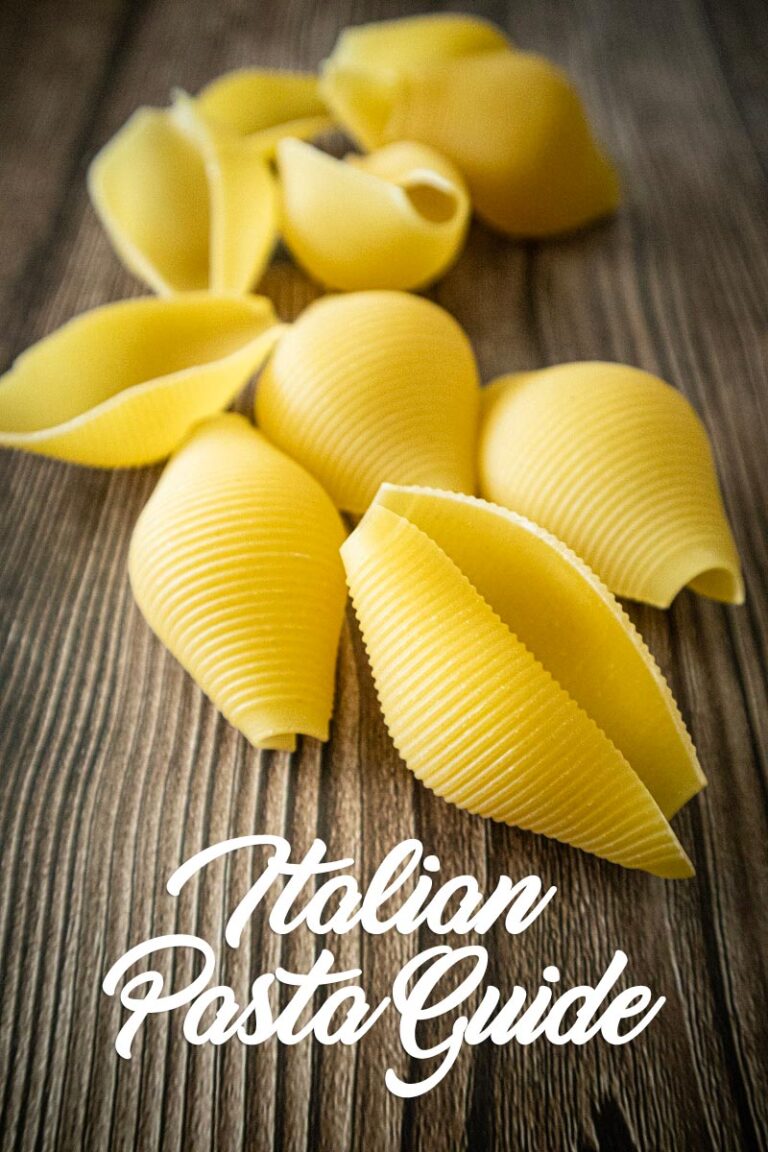
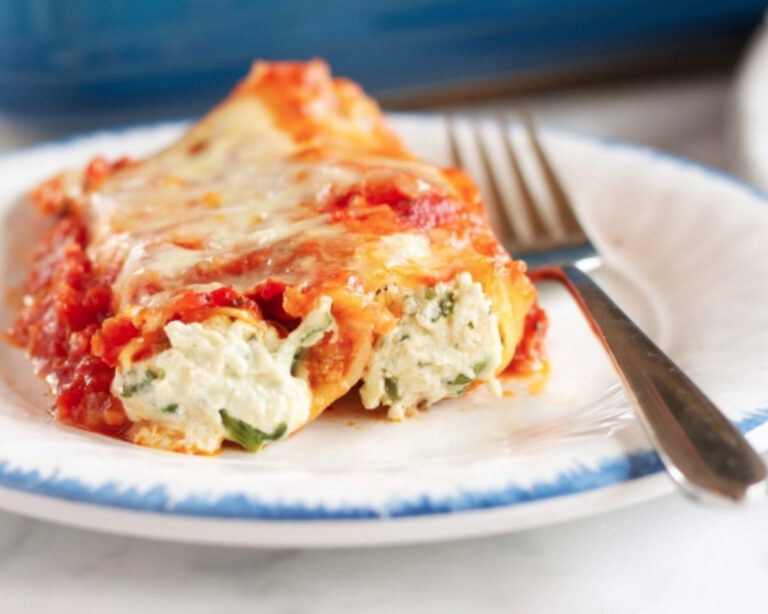
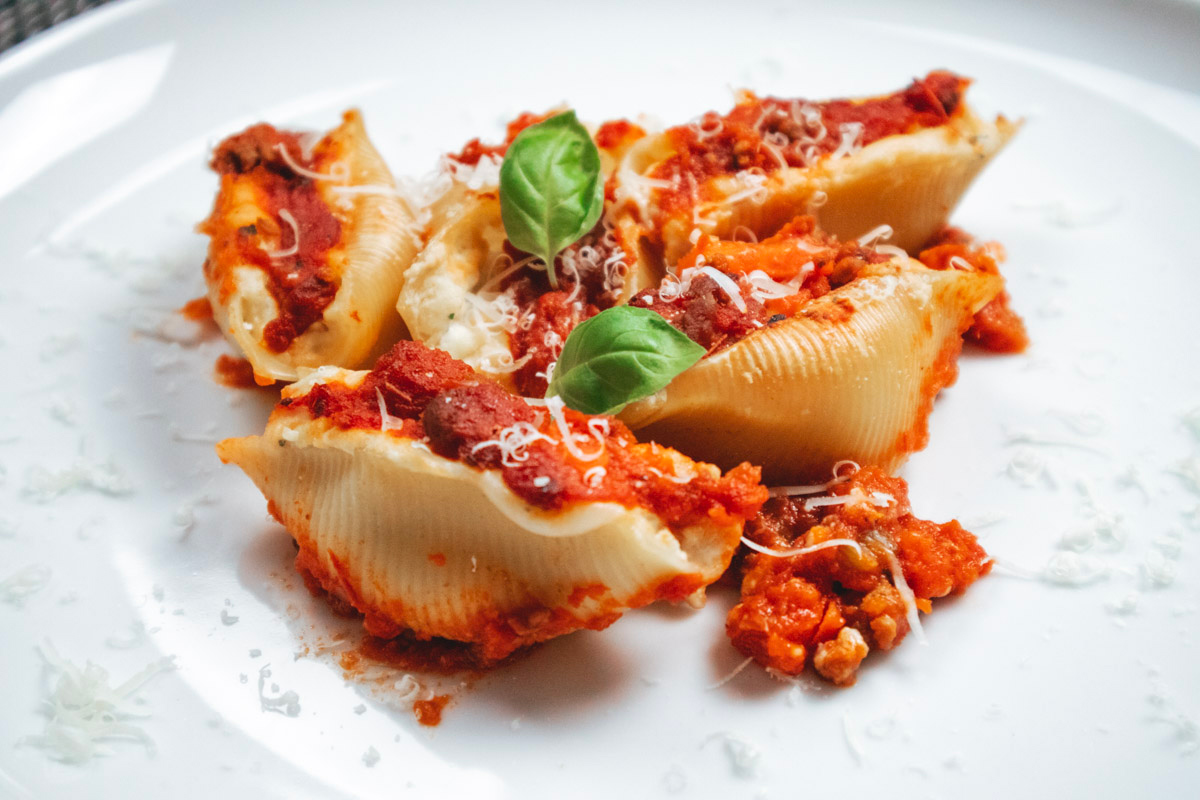
Jump to RecipeThese Stuffed Shells with Meat and Ricotta Cheese are my Italian take on a classic baked pasta dish. In Italy, we call these large, shell-shaped pasta conchiglioni, and in this recipe, we fill them with a creamy ricotta mixture, Parmigiano Reggiano DOP, and Italian cooked ham. The shells are nestled in a rich homemade meat sauce, then topped with plenty of cheese before baking until golden and bubbling.
This satisfying dish can be prepared ahead of time, making it a great option for Sunday lunch, family gatherings, or dinner with friends. The shells take a little time to fill, but you can assemble everything in advance and bake it when you’re ready to serve.
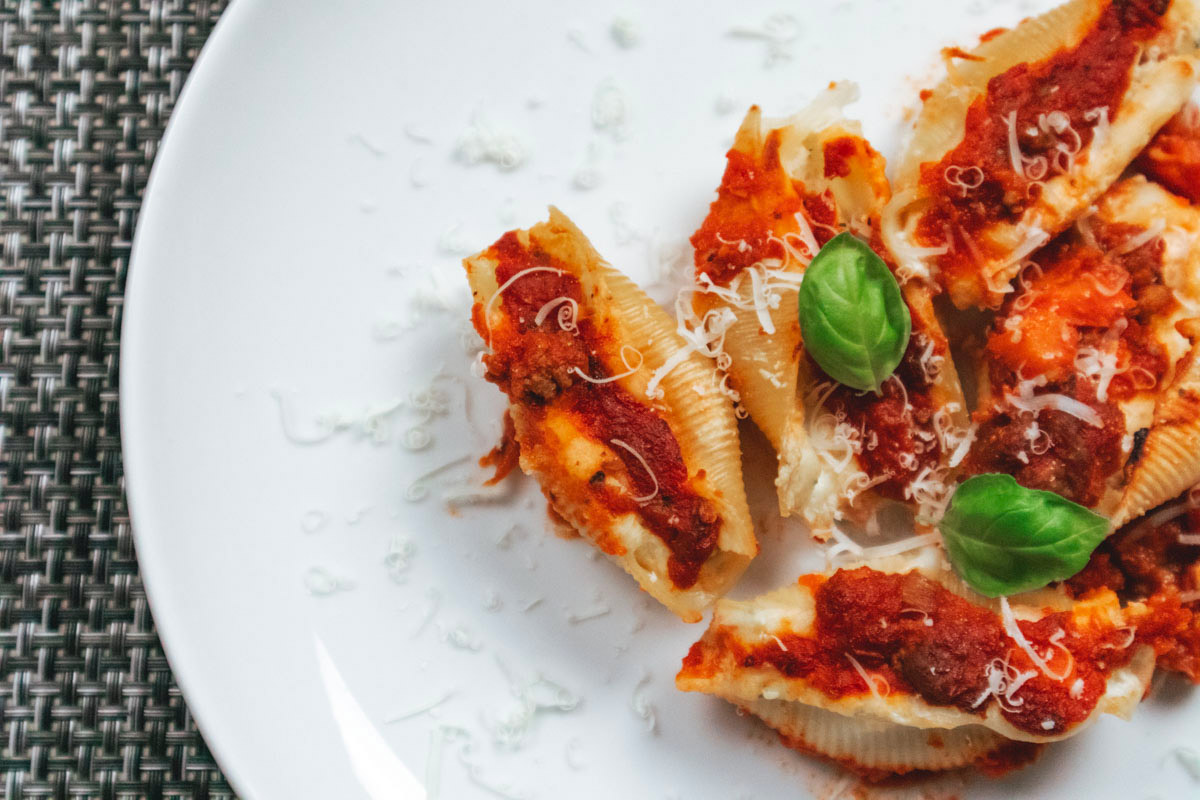
This baked stuffed pasta dish is perfect for preparing ahead of time, and there are plenty of variations to try. It is an easy recipe to make and a practical choice when you’re planning a meal with friends or a traditional Sunday lunch. In Italy, we often serve stuffed shells as a first course, but they can also be served as a main dish.
The key to making stuffed shells is choosing pasta that holds its shape through both cooking and baking. For this traditional version, I use a meat sauce to cover the shells before baking. If you prefer a meatless version, you can use marinara sauce or homemade béchamel sauce instead, and add spinach to the ricotta filling.
Like vegetarian lasagna, baked stuffed shells are easy to adapt. At the end of the recipe, you’ll find a few variations to try.
Ingredients
To make these baked stuffed shells, you’ll need:
- Jumbo pasta shells (conchiglioni)
- Sheep’s milk ricotta
- Diced Italian cooked ham
- Parmigiano Reggiano DOP or Grana Padano
- Breadcrumbs
- Shredded mozzarella
For the meat sauce
- Carrots
- White or yellow onion
- Celery stalks
- Ground pork
- Ground veal
- Red wine
- Tomato passata
- Fresh basil
- Aromatic herbs
- Cayenne pepper
- Extra-virgin olive oil
Ingredient Notes and Substitutions
Jumbo pasta shells: Choose good-quality pasta. Bronze-die pasta is my preference because it tends to hold its shape well during cooking and baking. If you use your favorite brand, check the package cooking time and boil the shells until al dente. They will continue cooking in the oven, so you don’t want them to become too soft or fall apart.
Sheep’s milk ricotta: I prefer sheep’s milk ricotta for this recipe, but you can use cow’s milk ricotta or another variety you enjoy. Lactose-free ricotta also works if you need to avoid lactose. When preparing the filling, adjust its consistency with the other ingredients as needed.
Breadcrumbs: I usually make my own homemade breadcrumbs. They are easy to prepare, don’t require preservatives, and are a practical way to use up stale bread instead of throwing it away. If you buy breadcrumbs, choose plain ones without added herbs or spices. Check the sodium content as well, especially if you’re watching your salt intake.
Mozzarella cheese: You can use pre-shredded mozzarella or a block of mozzarella. If you use fresh mozzarella balls, cut or tear them into small pieces and let them drain for a few hours before using them. This helps remove excess moisture and keeps the filling from becoming watery. The same advice applies to lactose-free mozzarella.
Ground meat: I like to combine different meats when making a quick ragù. For this recipe, I use ground pork and ground veal, but you can also use a mixture of pork and lean ground beef. If you prefer not to mix meats, using just one variety is fine. Whenever possible, buy freshly ground meat from your butcher.
Red wine: Wine adds flavor to the meat sauce. During cooking, much of the alcohol evaporates, but the wine’s flavor remains. Choose a wine you enjoy drinking rather than one you wouldn’t want in your food. I usually use a good Sangiovese or a reasonably priced cooking wine.
Parmigiano Reggiano DOP: What does DOP mean? DOP stands for Denominazione di Origine Protetta, or Protected Designation of Origin. It identifies products whose origin and production must meet specific standards. Authentic Parmigiano Reggiano DOP is produced in a designated area of Italy according to established production rules. If you cannot find Parmigiano Reggiano, American parmesan cheese can be used as a substitute.
Sicilian ragù and peas: In Italy, ragù is a meat-based sauce, not simply another name for tomato sauce. There are many regional variations, and in Sicily, peas are a traditional addition. In this recipe, you can add peas to the ragù if you want to prepare it the traditional Sicilian way.
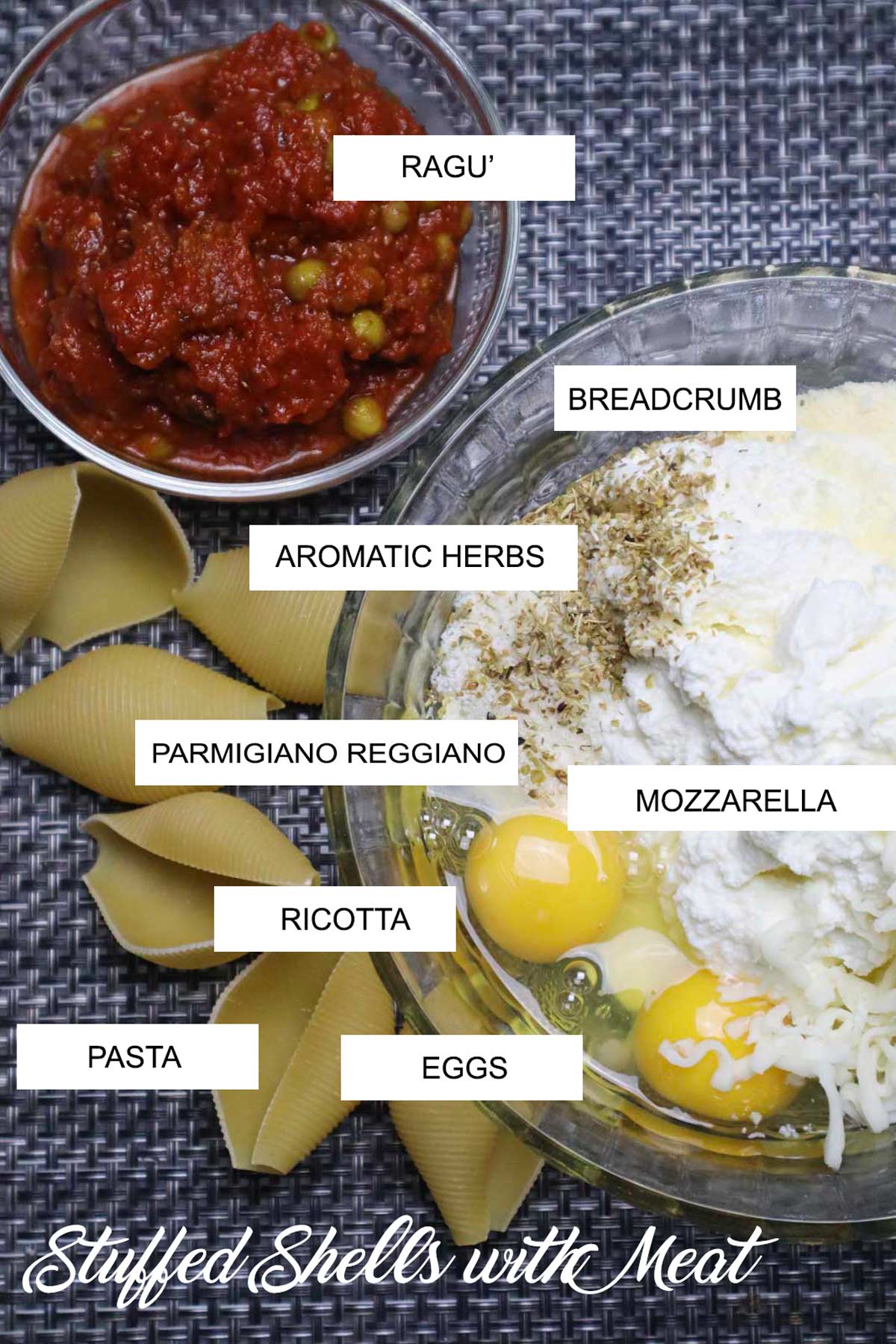
How to Make Stuffed Shells with Meat and Ricotta Cheese
The first step in making these baked stuffed shells is preparing the meat sauce. I recommend making the ragù ahead of time so it’s ready when you start assembling the dish.
Once the sauce is ready, you can move on to preparing the pasta and ricotta filling.
What is Italian ragù?
If you’re in the United States, you may recognize Ragu as a brand of jarred pasta sauce. But in Italy, ragù is something quite different. It is a meat-based sauce, slowly cooked with vegetables, tomatoes, and seasonings until the flavors come together. There are many regional versions across Italy, each with its own ingredients and traditions. In Sicily, ragù is often made with ground meat and can include peas, as in the traditional version I grew up with. For these stuffed shells, I make a quicker ragù that still brings plenty of flavor to the dish.
Make the Quick Meat Ragù
Heat a drizzle of extra-virgin olive oil in a large, deep skillet over medium heat. Add the finely chopped onion, diced carrots, and sliced celery. Sauté for a few minutes, until the vegetables begin to soften and turn lightly golden.
Add the ground pork and ground veal, breaking up the meat with a wooden spoon so it cooks evenly. Brown the meat over medium heat for about 10 minutes.
Season with salt and pepper, then pour in half a glass of red wine. Increase the heat slightly and let the wine evaporate, stirring occasionally. Continue cooking until most of the cooking liquid has evaporated.
Keep in mind that the meat may continue releasing liquid, even after the wine has evaporated. This is normal, especially after adding salt, which draws moisture out of the meat. You don’t need to wait until the pan is completely dry.
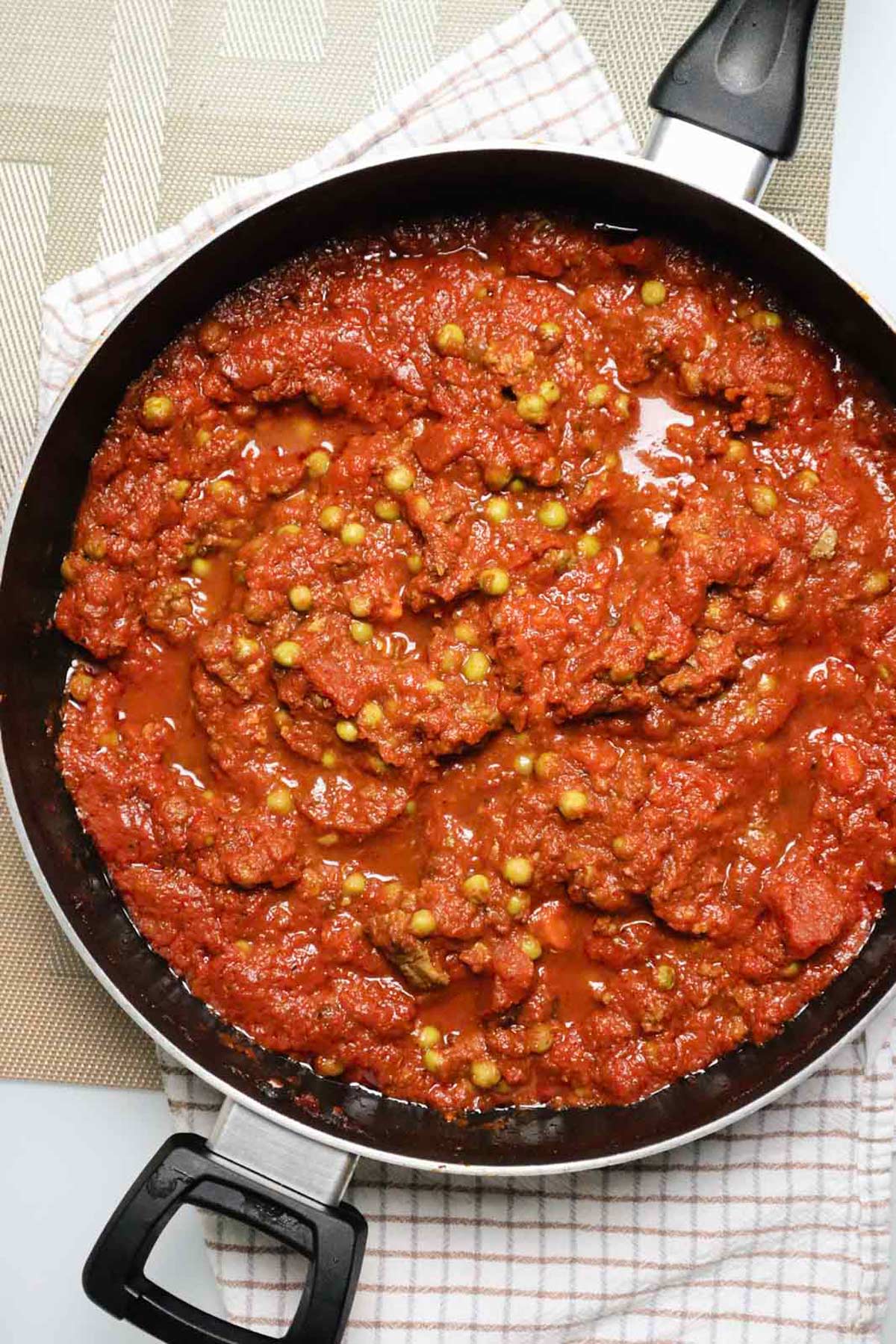
Stir in the tomato passata and half a glass of water. Mix well and let the sauce simmer for 25- 30 minutes, or until it reaches the consistency you prefer.
For a traditional Sicilian ragù, add peas. They are optional in this recipe, but peas are a familiar addition to ragù in Sicily and are worth including if you want to prepare the sauce the Sicilian way. Their sweetness makes the sauce less acidic.
Taste the ragù and adjust the salt if needed. Set aside.
Prepare the Ricotta Filling
Sheep’s milk ricotta can usually be purchased a day ahead and left to drain in a fine-mesh strainer. If you’re using another type of ricotta, I recommend draining it for at least an hour to remove excess moisture.
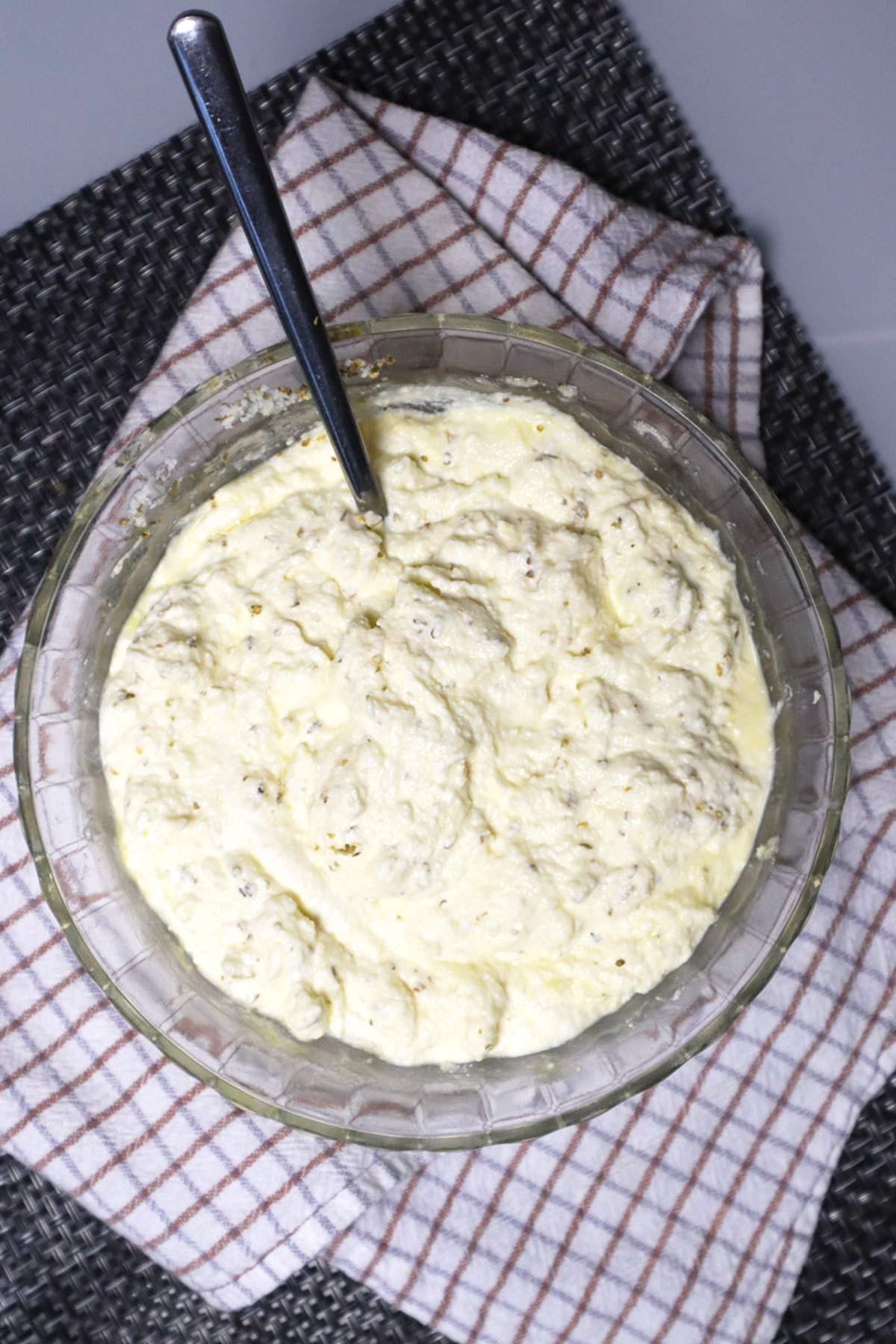
Transfer the ricotta to a large mixing bowl. Add the Parmigiano Reggiano DOP, whole eggs, a pinch of salt, and a pinch of black pepper, if desired. Mix with a fork or spoon until combined.
Dice the Italian cooked ham and add it to the ricotta mixture along with the breadcrumbs. Mix well. The filling should be soft but firm enough to hold its shape inside the pasta shells.
Cook the Jumbo Pasta Shells
Bring a large pot of water to a boil. Add salt and the jumbo pasta shells.
Cook the shells for 3 minutes less than the package directions. They should be al dente but soft enough to open and fill without breaking.
Remove the pot from the heat, drain the shells in a colander, and transfer them to a bowl. They’re now ready to be filled.
Fill the Shells with Ricotta
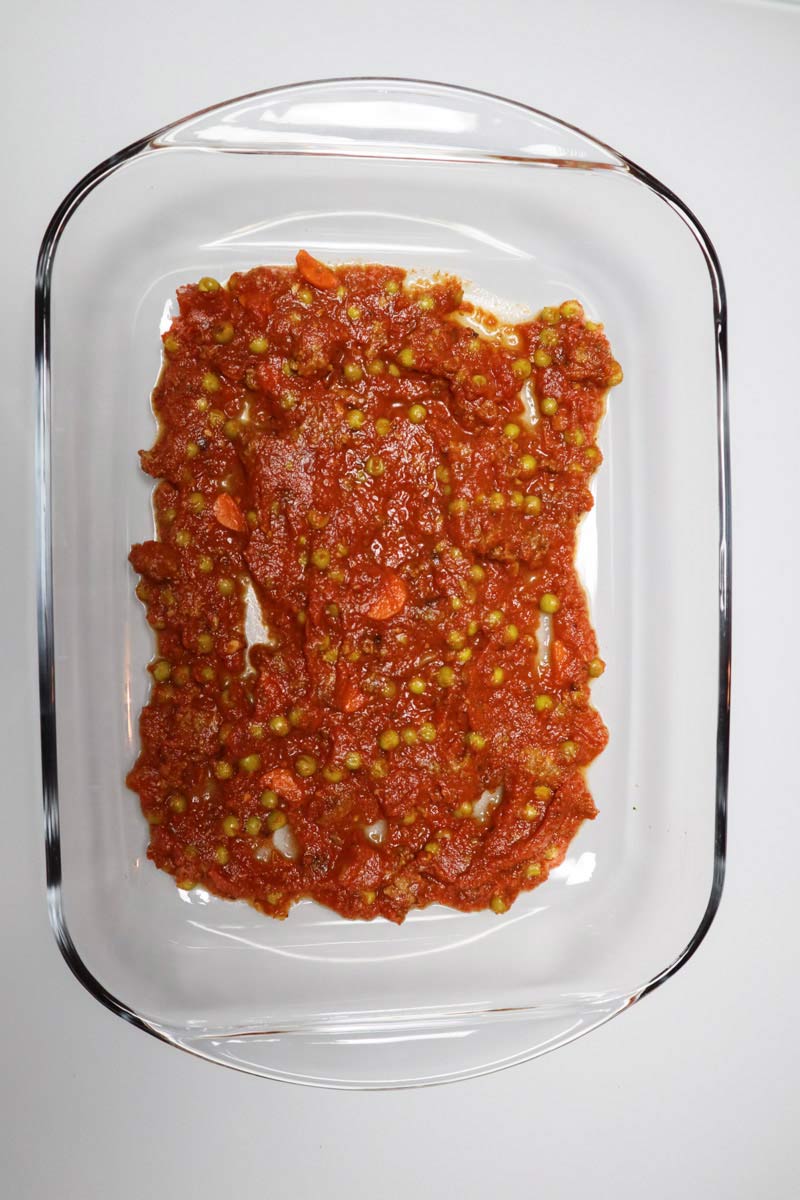
Spread a layer of meat ragù over the bottom of a large baking dish.
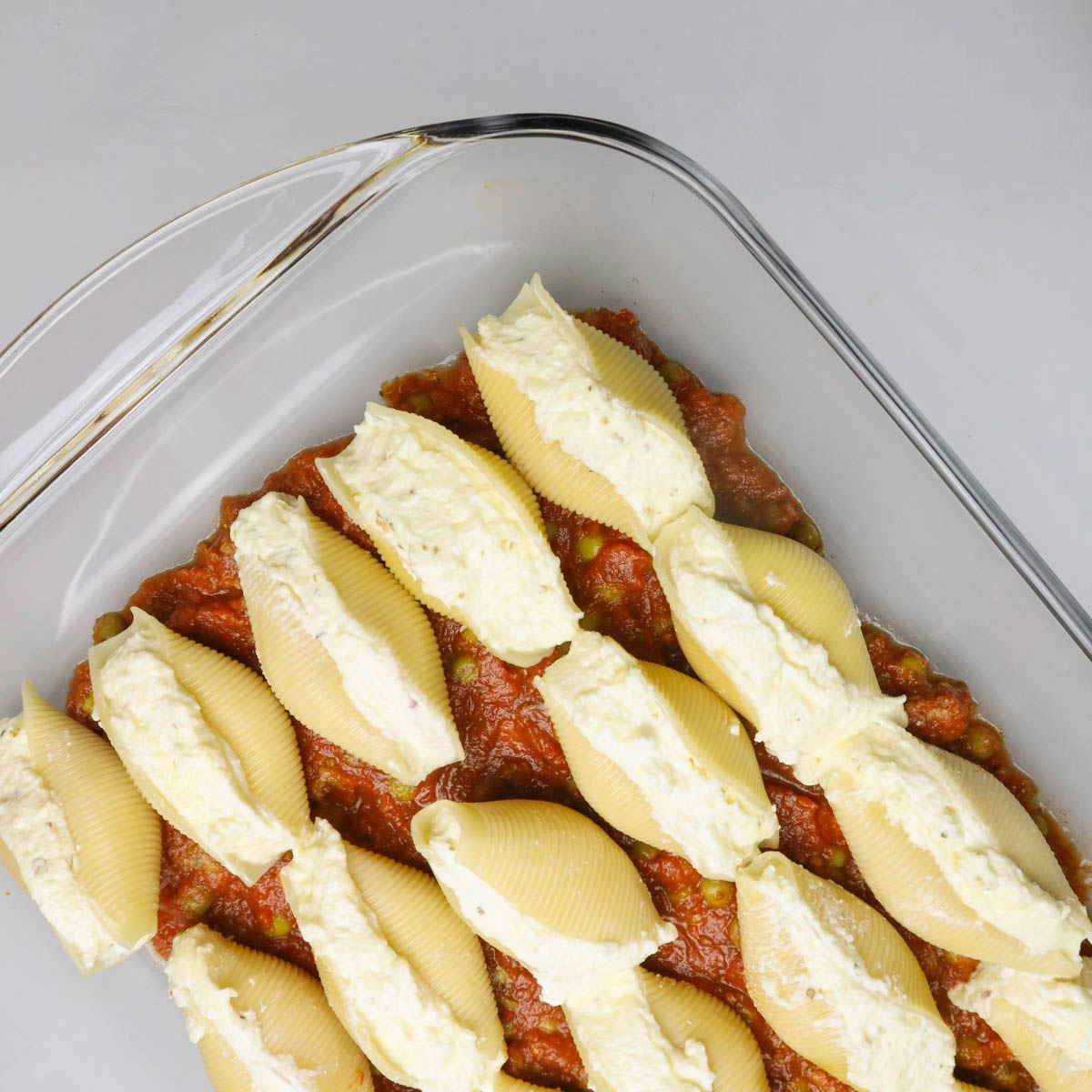
Using a teaspoon, fill each shell with the ricotta mixture. Fill each shell about three-quarters full to help keep the filling from spilling out during baking.
Arrange the stuffed shells in the dish in a single layer, filling the dish as much as possible.
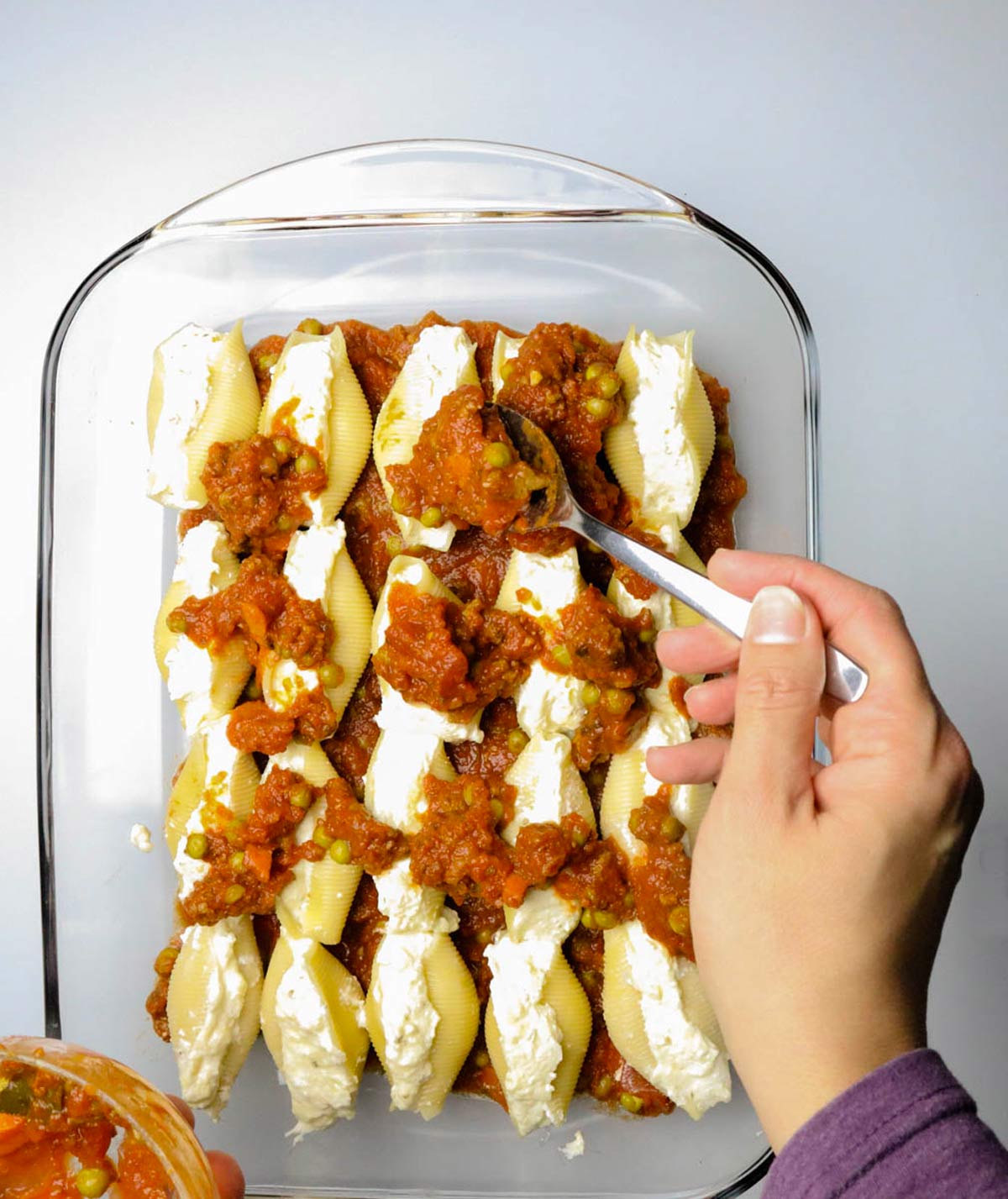
Cover the shells with another layer of ragù.
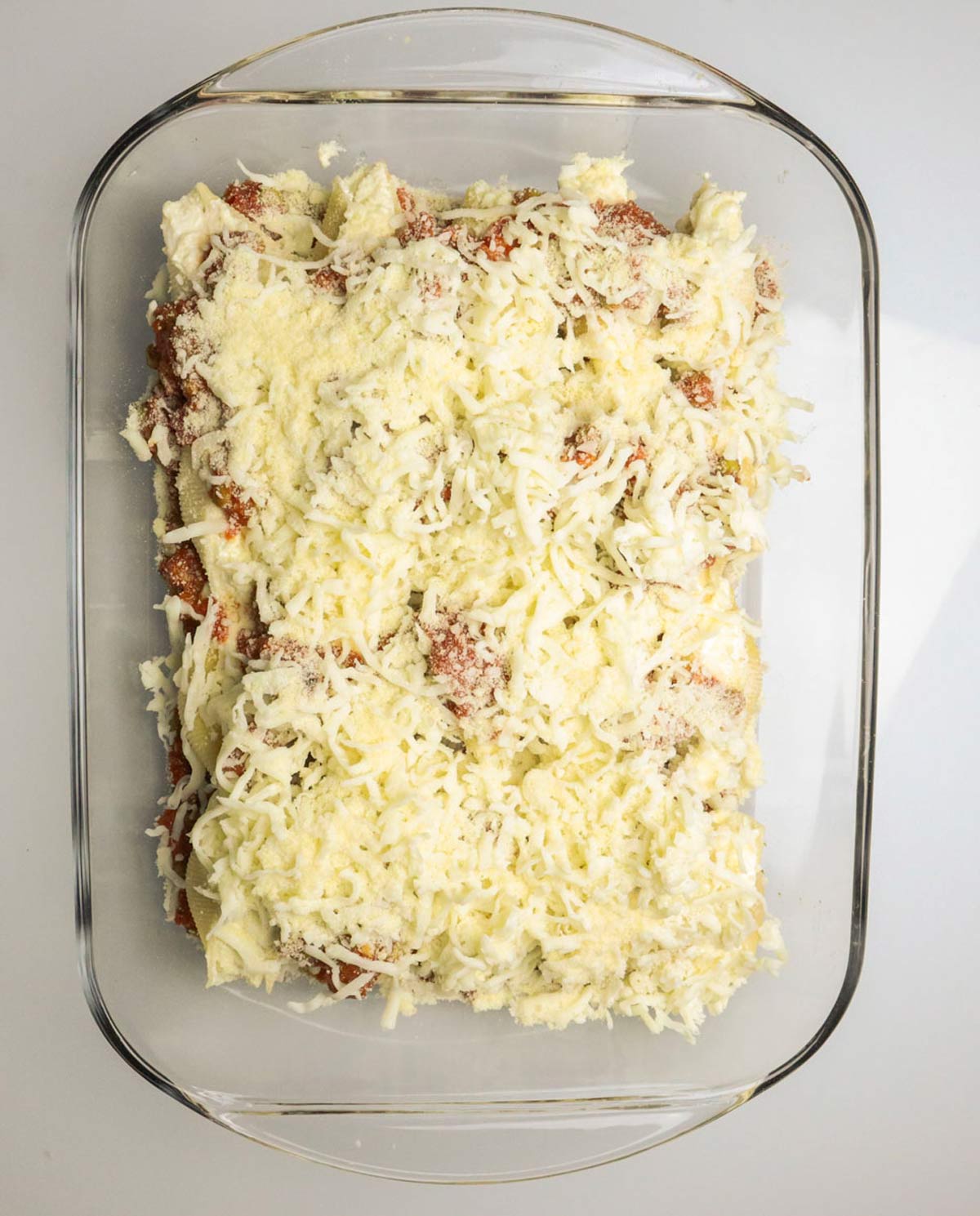
Sprinkle generously with shredded mozzarella and grated Parmigiano Reggiano DOP.
Bake the Stuffed Shells
Preheat the oven to 360°F (180°C). Cover the baking dish with aluminum foil and bake for 20 minutes.
Remove the foil and bake for another 20 minutes, or until the cheese on top is melted and a light golden crust forms.
How to Serve Stuffed Shells
These stuffed shells are best served warm or at room temperature. If you want to prepare them ahead of time, you can bake them several hours before serving and reheat them in the oven at 320°F (160°C) for about 15 minutes before bringing them to the table.
For Sunday Lunch or a Special Occasion
In Italy, a baked pasta dish like this can be served as a main course, or as the first course of a larger Sunday or holiday meal. If you’re serving it as part of a traditional Italian meal, here are a few ideas for what to serve alongside it.
For the main course, you could prepare a roast, Italian chicken rolls, or Sicilian baked meatloaf.
If you’d rather skip a second course, serve the stuffed shells after an appetizer, such as Sicilian bruschetta, eggplant rolls, savory pies, or savory gourmet tartlets.
For a Buffet or Party
These baked stuffed shells are also a good choice for a birthday party or a gathering with friends. Serve them directly from a colorful or decorative ceramic baking dish on the buffet table, allowing guests to help themselves.
Since each shell can be served with a spoon, they’re practical for this type of occasion.
What Wine to Serve with Stuffed Shells
A good red wine pairs well with the meat ragù and cheese. Some of my favorites to serve with this dish are Merlot, Cabernet Sauvignon, Sangiovese, and Barolo.
How to Store, Freeze, and Reheat Stuffed Shells
Refrigerating before baking: you can assemble the stuffed shells in the baking dish and keep them uncooked in the refrigerator for up to 2 days, provided the ingredients are fresh and have been stored safely.
Refrigerating after baking: store leftover cooked stuffed shells in an airtight container in the refrigerator for up to 3 days.
Freezing: you can freeze the stuffed shells after baking. Let them cool, store them in a freezer-safe airtight container, and thaw them in the refrigerator before reheating.
Reheating in the oven: reheat at 320°F (160°C) for about 20 minutes, or until heated through.
Reheating in the microwave: reheat individual portions for about 2 minutes, adjusting the time as needed until heated through.
Tips for Making Stuffed Shells
Customize the ricotta filling. For this recipe, I keep the filling simple, using salt, Parmigiano Reggiano DOP, and diced Italian cooked ham. The meat ragù already has plenty of flavor. If you like, you can also add Pecorino Romano, mild pancetta, mild provola, mozzarella, or fresh herbs.
Choose your cheese. If you’re using fresh mozzarella balls, let them drain for 2–3 hours before adding them to the dish to remove excess moisture. This isn’t usually necessary with a low-moisture mozzarella block. You can also experiment with other Italian cheeses, such as caciocavallo, mild or sharp provolone, Gorgonzola, or plain or smoked provola.
Cook the ragù to your preferred consistency. The sauce usually takes about 30 minutes to cook, but it may be ready sooner if it simmers steadily. I like to let it reduce until it has roughly halved before tasting it. You can stop cooking sooner if you prefer a fresher, more pronounced tomato flavor.
Make the sauce creamier with béchamel. For a creamier result, stir about 3 tablespoons (50 ml) of homemade béchamel sauce into the ragù when assembling the dish. If you prefer not to use meat sauce, you can replace it with about 1⅔ cups (400 ml) of béchamel sauce.
Stuffed Shells with Meat and Ricotta Cheese
Ingredients
For the stuffed shells
- 24 jumbo pasta shells (conchiglioni)
- 10.5 oz sheep's milk ricotta
- 1/2 cup finely grated Parmigiano Reggiano DOP
- 1.75 oz cooked ham, diced
- 2 medium eggs
- 4 tbsp breadcrumbs
- 8.8 oz prepared pork-and-veal ragù
- 1.75 oz shredded mozzarella
For the meat ragù
- ½ Carrot
- ¼ onion
- ½ celery stalk
- 1.75 oz ground pork
- 1.75 oz ground veal
- ¼ glass red wine
- 3⅛ cups tomato passata
- Fresh basil, to taste
- Aromatic herbs, to taste
- Cayenne pepper, to taste
- Extra-virgin olive oil, as needed
Instructions
Make the meat ragù
- Finely chop the carrot, onion, and celery.
- Heat a drizzle of extra-virgin olive oil in a large pot over medium heat. Add the chopped vegetables and sauté until softened.
- Add the ground pork and veal. Cook for about 10 minutes, breaking up the meat with a wooden spoon until browned.
- Add the red wine and let it evaporate, stirring occasionally.
- Stir in the tomato passata, basil, aromatic herbs, and cayenne pepper to taste. Add salt as needed. Simmer for about 25–30 minutes, or until the ragù reaches your preferred consistency.
Prepare the ricotta filling
- If the ricotta is watery, drain it in a fine-mesh strainer before using.
- In a large bowl, combine the ricotta, grated Parmigiano Reggiano DOP, eggs, a pinch of salt, and black pepper to taste.
- Add the diced cooked ham and breadcrumbs. Mix until combined. The filling should be soft but firm enough to hold its shape.
Cook and fill the shells
- Bring a large pot of water to a boil. Add the jumbo shells and cook for 3 minutes less than the package instructions. Drain carefully.
- Fill each shell about three-quarters full with the ricotta mixture.
- Spread a layer of ragù over the bottom of a baking dish. Arrange the stuffed shells in a single layer.
- Cover with the remaining ragù and sprinkle with shredded mozzarella and additional grated Parmigiano Reggiano DOP, if desired.
Bake
- Preheat the oven to 350°F (180°C).
- Cover the baking dish with aluminum foil and bake for 20 minutes.
- Remove the foil and bake for another 20 minutes, until the cheese is melted and lightly golden.
- Let the shells rest briefly before serving.
Notes
-
Notes
- Ricotta: I recommend sheep’s milk ricotta for this recipe, as it has a distinctive flavor. If your ricotta contains excess liquid, drain it in a fine-mesh strainer before preparing the filling. You can also use cow’s milk ricotta.
- Parmigiano Reggiano DOP: for the best flavor, use freshly grated Parmigiano Reggiano DOP. You can substitute Grana Padano or add a little Pecorino Romano if you prefer a stronger, saltier cheese flavor.
- The cooked ham: use cooked ham, diced into small pieces. It adds flavor to the ricotta filling without overpowering the cheese.
- Cooking the pasta shells: cook the jumbo shells for 3 minutes less than the package directions. They will finish cooking in the oven, and slightly firmer shells are easier to fill without breaking.
- The meat ragù: this recipe makes more ragù than you may need for the stuffed shells. Use enough to cover the bottom of the baking dish and the shells, then save any leftover sauce for another meal. The ragù is also delicious served with pasta.
- A Sicilian touch: in Sicily, peas are a traditional addition to many versions of ragù. If you want to prepare the sauce the Sicilian way, add peas to the meat sauce.
- Make ahead: you can assemble the stuffed shells in the baking dish, cover, and refrigerate them before baking. For best results, bake within 1–2 days and make sure the filling and sauce have been stored safely. If baking directly from the refrigerator, allow extra time for the dish to heat through.
- Storing leftovers: refrigerate cooked stuffed shells in an airtight container for up to 3 days.
- Freezing: let the cooked stuffed shells cool, then freeze them in a freezer-safe container. Thaw in the refrigerator before reheating.
- Reheating: Reheat in a 320°F (160°C) oven until heated through, usually about 20 minutes depending on the portion size. Individual portions can also be reheated in the microwave.
- More tips and variations: for more tips on choosing the ingredients, preparing the meat ragù, making the stuffed shells ahead of time, and serving them, read the full article above the recipe card.
Nutrition
Please note that nutritional values are created by an online calculator and should only be used as an estimate.